Arizona EV Insurance Guide
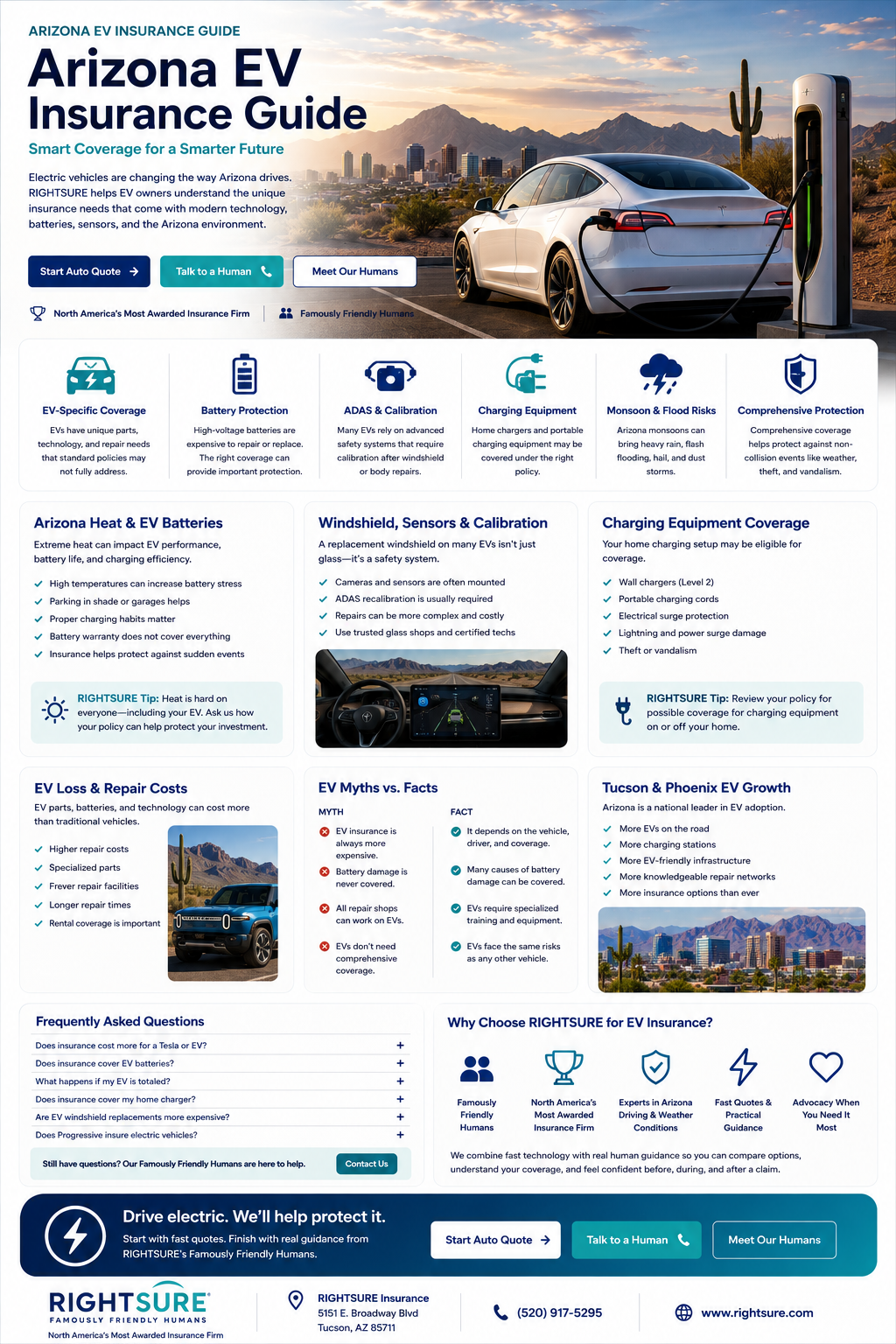
Electric vehicles are changing how Arizona drives. RIGHTSURE helps EV owners understand coverage for batteries, sensors, glass, charging equipment, Arizona heat, monsoon risks, and modern repair costs.
EV-Specific Coverage
Electric vehicles often include batteries, sensors, software, cameras, and parts that can make coverage conversations different from traditional vehicles.
Battery Protection
High-voltage batteries can be expensive to repair or replace. EV owners should understand how their policy may treat battery damage.
ADAS Calibration
Many EVs rely on advanced safety systems that may require recalibration after windshield, bumper, or body repairs.
Home Chargers
Wall chargers, portable cords, and home charging equipment may need separate review depending on the policy and installation.
Why EV Insurance Is Different in Arizona
Arizona EV owners face modern technology risks plus classic desert driving conditions: heat, monsoons, dust, glass damage, charging equipment, and specialized repairs.
Extreme temperatures can affect battery performance, charging behavior, tires, and vehicle systems.
EVs often rely on cameras, radar, sensors, and software-assisted safety systems.
Specialized parts, fewer repair facilities, and calibration needs may affect claim costs.
Flooding, hail, dust storms, and road debris can affect EVs just like gas-powered vehicles.
What should Arizona EV owners review?
EV owners should review comprehensive and collision coverage, glass coverage, roadside assistance, rental reimbursement, charging equipment, battery damage, and repair network rules.
RIGHTSURE’s Famously Friendly Humans help EV owners understand the policy details before a claim, not after.
EV Coverage Topics
- Battery damage
- Charging equipment
- Glass and windshield sensors
- ADAS recalibration
- Roadside assistance
- Rental reimbursement
EV Myths vs. Facts
Electric vehicles are modern, but insurance still comes down to understanding risk, repairs, coverage, and claims.
Myth
- EV insurance is always more expensive.
- Battery damage is always covered.
- Any repair shop can work on every EV.
- EVs do not need comprehensive coverage.
Fact
- Cost depends on vehicle, driver, location, and coverage.
- Battery claims depend on cause and policy wording.
- Specialized repairs and calibrations may be required.
- EVs face weather, theft, vandalism, and glass risks too.
Tesla, Rivian, Lucid & More
EV brands may involve different repair networks, parts availability, glass technology, and calibration needs.
If you drive a Tesla, Rivian, Lucid, Ford Lightning, Hyundai IONIQ, Kia EV, or another electric vehicle, coverage review matters.
EVs and Arizona Monsoons
EVs can still face hail, flooding, dust storm accidents, road debris, and storm-related glass damage.
Comprehensive coverage may be especially important for non-collision damage.
Arizona EV Insurance FAQs
Does insurance cost more for a Tesla or EV?
Sometimes. EV insurance cost depends on the vehicle, driver, repair costs, location, coverage selections, and claim history.
Does insurance cover EV battery damage?
Battery damage coverage depends on the cause of loss, policy wording, exclusions, and whether the damage is connected to a covered event.
Does insurance cover a home EV charger?
Home charger coverage may depend on your home policy, auto policy, installation, and whether the charger is permanently attached or portable.
Do EV windshields cost more to replace?
Many EV windshields include cameras, sensors, and ADAS technology. Replacement may require calibration, which can increase complexity and cost.
Can RIGHTSURE help with EV insurance?
Yes. RIGHTSURE helps Arizona EV owners compare options and understand coverage with real guidance from Famously Friendly Humans.
Drive electric. We’ll help protect it.
Start with fast quote technology. Finish with real guidance from RIGHTSURE’s Famously Friendly Humans.