RIGHTSURE Wildfire Risk Guide
Wildfire & Brushfire Risk Q&A
Learn how wildfire and brushfire risk scores may impact homeowners insurance underwriting, renewals, premiums, cancellations, FAIR Plans, and property protection strategies.
Insurance companies may use wildfire and brushfire risk scoring models when underwriting new homeowners policies or reviewing renewals.
Understanding these scores can help property owners better prepare and respond.
Explore wildfire defense strategies, defensible space tips, ember-resistant vents, gutter protection, and wildfire insurance program guidance.
Wildfire risk scoring systems are designed to estimate the likelihood and severity of wildfire exposure in a community or around a property.
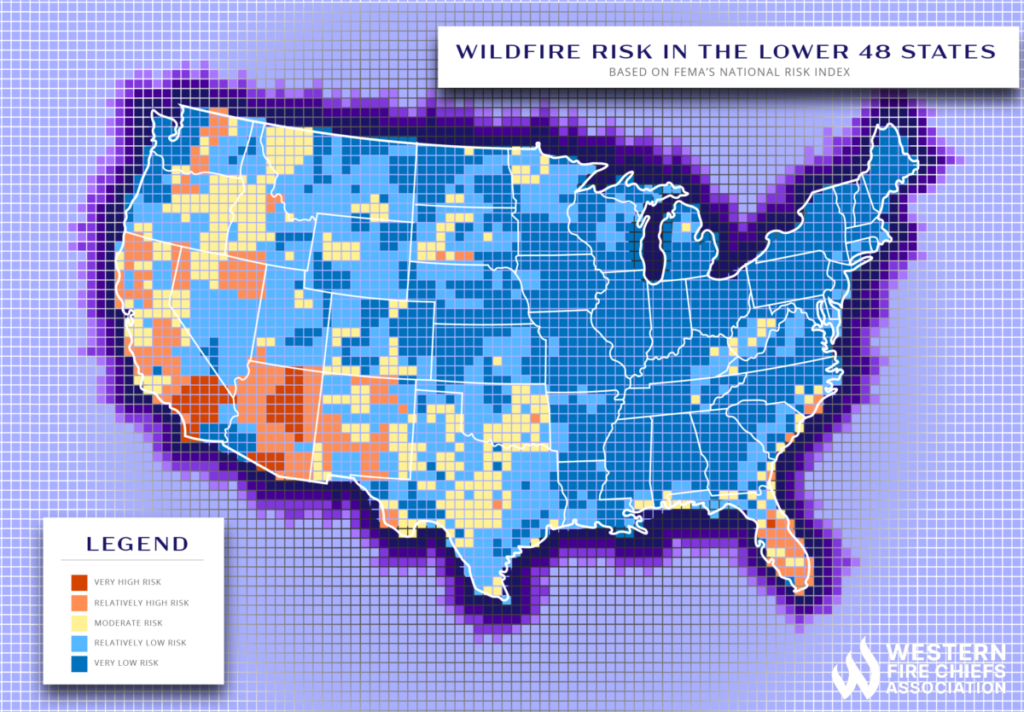
FEMA’s National Risk Index evaluates expected building and population loss relative to other U.S. communities using factors like terrain, weather, vegetation, and geographic location.
Some insurance companies use proprietary wildfire models and internal claims data to assess wildfire or brushfire exposure and underwriting eligibility.
Some homeowners are surprised to discover their property has a moderate or high wildfire score, especially in suburban or residential areas.
Wildfire exposure can be influenced by nearby brush, terrain, wind, weather patterns, roofing materials, and surrounding vegetation.
Wildfire scores may influence underwriting, renewals, premiums, and eligibility depending on the carrier.
Lower wildfire scores may help improve insurance placement options and affordability.
Moderate wildfire scores may contribute to increased premiums or underwriting review.
Higher wildfire scores may create placement challenges, policy non-renewals, or stricter underwriting requirements.
Do not panic. Homeowners may still have options even after receiving a non-renewal notice or major rate increase.
RIGHTSURE’s Famously Friendly Humans help homeowners navigate difficult insurance placements using access to multiple carriers and creative underwriting strategies.
While nobody controls weather patterns, homeowners can take practical steps to help make properties more defensible.
🍂Remove leaves, pine needles, and combustible debris regularly.
🌵Reduce dry brush and combustible material around structures.
🏠Use metal mesh or ember-resistant vent solutions where appropriate.
🔥Maintain safer spacing between the home and surrounding fuel sources.
The FEMA National Risk Index is a public tool that evaluates natural hazard exposure for communities across the United States.
Yes. Some insurance companies may use wildfire risk scoring during underwriting or renewal review.
Homeowners may still have options including carrier changes, underwriting appeals, mitigation improvements, or FAIR Plan alternatives depending on the state.
Yes. RIGHTSURE helps homeowners review coverage options, wildfire exposure conversations, and alternative carrier opportunities.