Skip to content Accessibility info
QUICK COVERAGE GUIDE

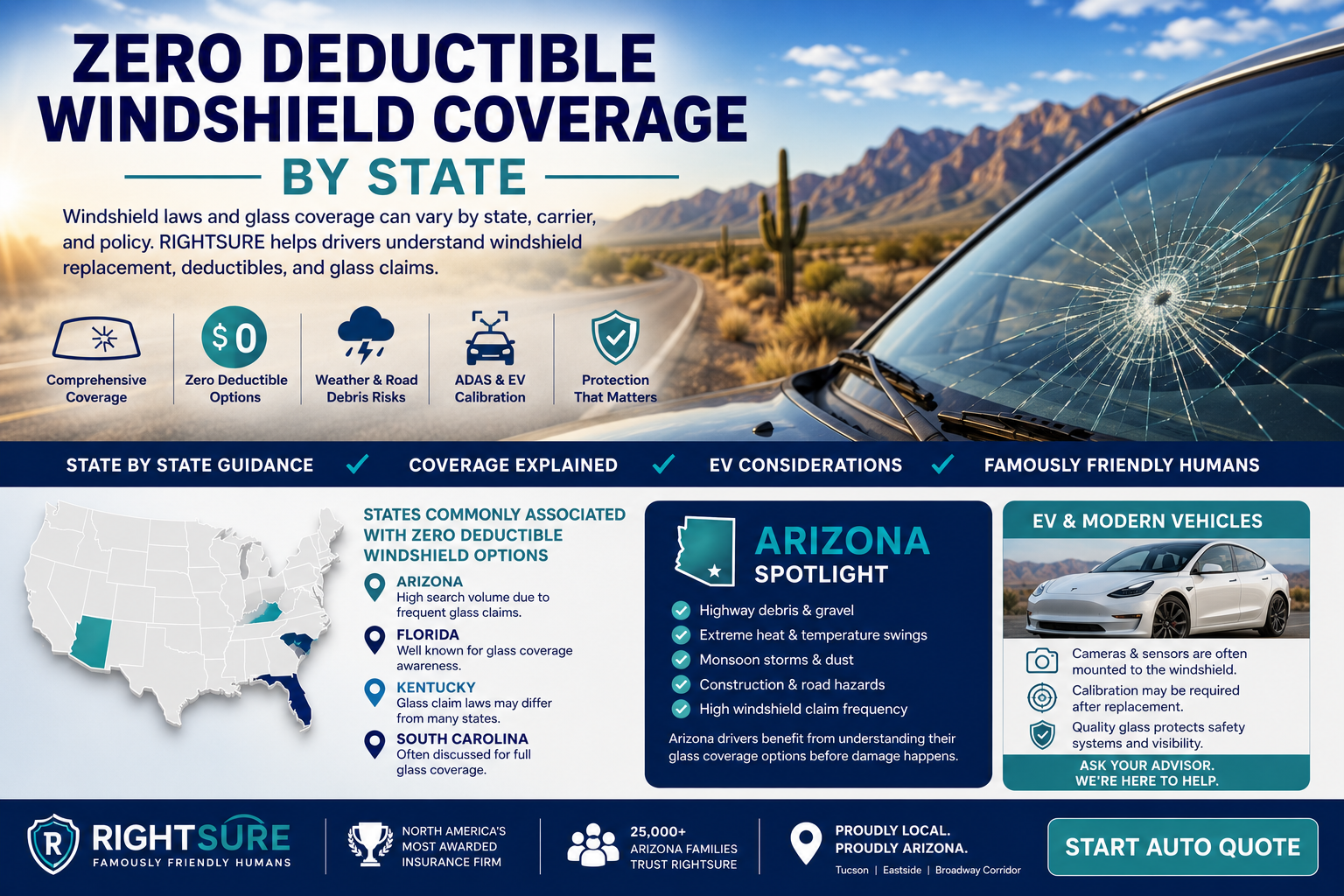
Windshield and Auto Glass Coverage by State

A simple guide to where windshield and glass claims are automatically $0, where insurers must offer $0 glass, and where your comprehensive deductible still applies.

Important: “Glass Is Covered” Does Not Always Mean “Glass Is Free”

Most drivers think their windshield is covered.

In many cases, it is. But that does not mean the deductible disappears.

In most states, your comprehensive deductible still applies unless your state requires otherwise or your policy was specifically structured with zero deductible glass coverage.

Zero deductible windshield coverage is one of the most misunderstood parts of personal auto insurance. Some states require it by law. Some require insurers to offer it as an option. Most states do neither.

The result is simple: two drivers can both have comprehensive coverage, both file a glass claim, and one pays nothing while the other pays hundreds of dollars out of pocket.

Quick Summary by State Category

Category States How Deductible Works
Mandatory $0 by law Florida, Kentucky, South Carolina Covered glass claims are $0 under the applicable law
Optional $0 option Arizona, Connecticut, Massachusetts, Minnesota, New York Optional — client must elect it if not automatically included
All other states Remaining states Comprehensive deductible usually applies unless endorsement exists

1. States with Mandatory $0 Deductible by Law

These are the states where a covered glass claim is handled with no deductible under state law, assuming the vehicle carries the required comprehensive coverage.

Florida

Windshield only. Insurers cannot apply a deductible to a covered windshield replacement claim.

Kentucky

Broader auto glass protection. Deductible does not apply to covered glass claims.

South Carolina

Safety glass is handled without a deductible when the claim qualifies.

2. States That Require Insurers to Offer $0 Glass Coverage

These states do not automatically give every driver zero deductible glass. Instead, insurers must offer the option. If the client does not elect it, the comprehensive deductible usually still applies.

States: Arizona, Connecticut, Massachusetts, Minnesota, New York

If the client elects it

Covered glass claims may be handled at $0 out of pocket, depending on policy wording.

If the client does not elect it

The comprehensive deductible usually applies just like it would for other covered losses.

Arizona Is Especially Important

Arizona is one of the most consumer-friendly states for glass coverage — and also one of the most misunderstood.

Arizona requires insurers to offer zero deductible glass coverage, but that does not mean every policy automatically includes it forever or in the same way.

This creates an important sales and service opportunity: many people believe they have “free glass,” when in reality the answer depends on how the policy was structured.

3. All Other States

In most states, there is no law requiring zero deductible windshield coverage and no law requiring insurers to offer it.

In those states, the standard rule is simple: if you have a glass claim under comprehensive coverage, your deductible usually applies.

Some carriers may still offer full glass coverage or zero deductible glass endorsements, but that is driven by the carrier and product design — not by state mandate.

Important Nuances Most People Miss

“Zero deductible” does not mean free

You still need comprehensive coverage, and you are still paying for the glass feature through premium or policy structure.

Windshield and full glass are not always the same

Florida focuses on windshield replacement. Kentucky and South Carolina are broader. In other places, the endorsement language matters.

The policy structure matters

Two drivers can both carry comprehensive coverage and still have different out-of-pocket glass results depending on elections and endorsements.

Why This Matters

Most drivers think their windshield is covered.

In many states, it is.

But they still pay $500. Sometimes $1,000. Sometimes more.

The difference is not luck. It is not random. And it is not always the insurance company. Often, the difference is how the policy was structured.

Frequently Asked Questions

Do I get zero deductible glass automatically if I have comprehensive coverage?

No. In most states, comprehensive coverage alone does not automatically eliminate your glass deductible. State law and policy elections matter.

Which states automatically provide $0 glass deductible by law?

Florida for windshield claims, Kentucky for all auto glass, and South Carolina for safety glass claims.

Which states require insurers to offer zero deductible glass?

Arizona, Connecticut, Massachusetts, Minnesota, and New York.

If my state does not require it, can I still get $0 glass?

Sometimes, yes. Some carriers offer endorsements or full glass options even in states that do not require them.

Does Florida require zero deductible for all glass?

No. Florida is generally known for windshield-only treatment, not necessarily all glass.

Why do so many drivers misunderstand glass coverage?

Because many people hear “glass is covered” and assume that means “no deductible.” In reality, those are not always the same thing.

Famously Friendly Humans

If you are not sure how your glass deductible works, RIGHTSURE can help you understand the structure of your policy.

Meet the Team

North America’s Most Awarded

RIGHTSURE is recognized for innovation, service, and helping clients make smarter insurance decisions.

See verified awards
Visit awards page

More Than Insurance

RIGHTSURE believes in supporting the communities it serves, not just the policies it writes.

See how RIGHTSURE gives back

Want to Know How Your Glass Coverage Is Structured?

If you are not sure whether your policy includes zero deductible glass, full glass, or standard comprehensive deductible treatment, RIGHTSURE can help you review it.

Talk to a Representative Review My Insurance Options